There was a time when I thought what our home needed most was a better schedule.
If I could just plan it perfectly—wake up earlier, structure the day tighter, organize every hour—then everything would fall into place.
But what I’ve learned, slowly and honestly, is that our home didn’t need more pressure.
It needed better rhythms.
Because families don’t thrive on perfection. They thrive on patterns that bring peace, structure that creates stability, and grace for the moments when life doesn’t go according to plan.
Over time, I’ve come to think of home life in four simple parts:
rhythms, routines, resets, and rest.
And honestly, when these four things are working together, home begins to feel less like survival and more like something you can actually enjoy.
Rhythms: The Flow of Our Days
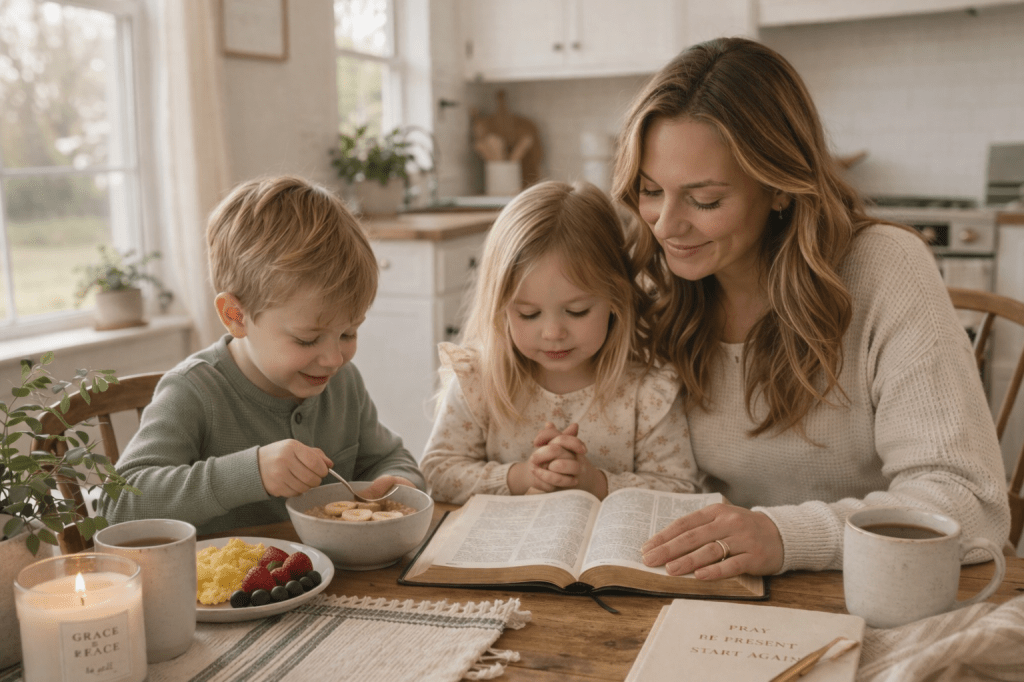
Rhythms are different from rigid schedules.
A schedule says:
“At 9:00 we must start.”
A rhythm says:
“After breakfast, we move into the next part of the day.”
That difference matters more than it seems.
Rhythms give shape to your day without making you feel trapped by the clock. They help your family know what comes next, but they also leave room for real life—slow mornings, unexpected interruptions, hard days, and moments that are worth lingering in.
Rhythms are what make a home feel like it has a natural flow.
In our home, rhythms often look like:
- morning connection before productivity
- moving from breakfast into school or work
- a midday pause before the second half of the day
- slowing the pace of the house in the evening
- creating a gentle transition toward bedtime
In real family life, that might look like:
- waking up, getting dressed, and easing into the day before jumping into responsibilities
- having breakfast together before everyone moves into their next assignment
- doing focused work while energy is still fresh
- taking a midday pause before the afternoon gets away from you
- cleaning up and dimming the pace of the house before bedtime
It doesn’t have to look the same in every home.
The point is not to copy someone else’s system.
The point is to create a flow that helps your family function with more peace and less friction.
Routines: The Structure That Supports Us

If rhythms are the flow, routines are the support underneath.
Routines are the small, repeated actions that keep your home from feeling chaotic.
Not overwhelming systems.
Not Pinterest-perfect charts.
Just simple, repeatable habits that support the day.
Things like:
- making beds in the morning
- putting pajamas away instead of leaving them on the floor
- cleaning up after meals
- returning school books and supplies to their place
- a quick afternoon tidy before the house gets too far gone
- preparing for tomorrow the night before
These little routines may not seem life-changing in the moment, but over time they reduce stress in a very real way.
They help the home feel held together.
Routines also remove decision fatigue.
They allow your children to step into responsibility naturally, instead of constantly being told what to do.
And over time, they create something powerful:
A home that runs with peace instead of pressure.
Resets: The Grace That Keeps the Whole Thing Going
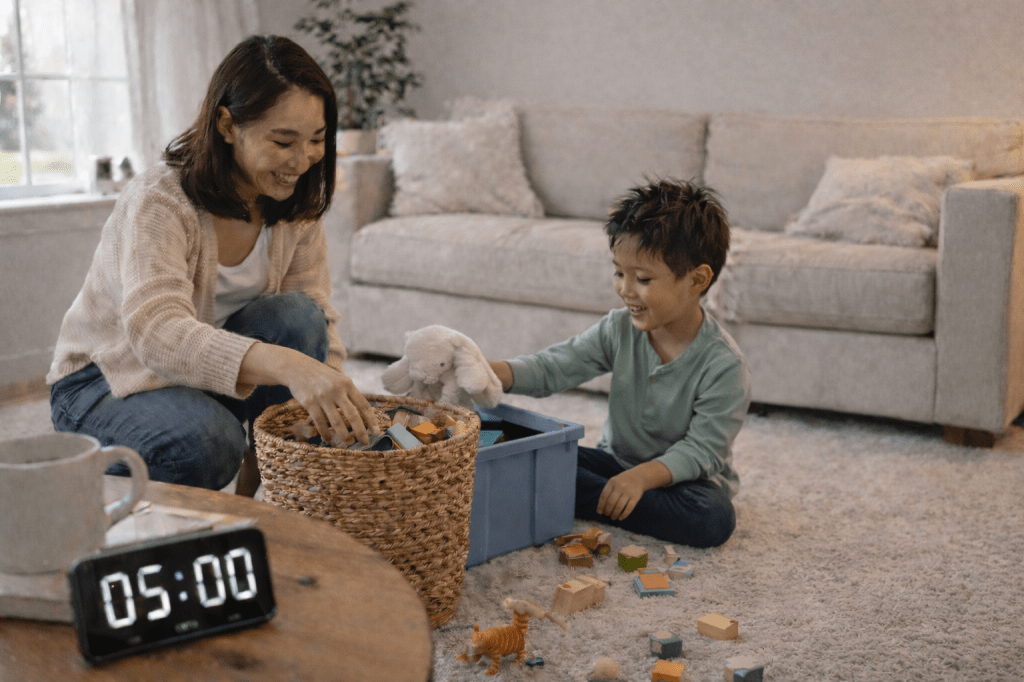
This may be one of the most important parts of all.
Because even with good rhythms and helpful routines, life still happens.
Dishes pile up.
Laundry gets behind.
School doesn’t go as planned.
Attitudes shift.
Days feel off.
This is where resets become essential.
Resets are what keep one hard moment from becoming an entire hard week.
They are the simple, intentional moments where you stop and say:
“We’re not going to carry this into the next part of the day.”
In our home, resets can look like:
- a 10-minute tidy before dinner
- everyone cleaning up one room together
- stepping outside for fresh air
- turning off the noise and regrouping
- praying together after a tense moment
- restarting school after a hard morning instead of giving up on the day entirely
Sometimes a reset is practical.
Sometimes it is emotional.
Sometimes it is spiritual.
Sometimes it looks like cleaning the kitchen and starting fresh.
Sometimes it looks like stopping in the middle of a hard moment to pray, regroup, and change the tone of the room.
Not every reset has to be big.
Some of the most meaningful ones are simple enough to happen in ten minutes.
Resets remind us:
We are never too far behind to begin again.
Rest: The Piece We Often Skip

This is the one that is easiest to overlook—and the one that matters most.
Rest is not just sleep.
It’s intentional pause.
It’s choosing to slow down even when there is more to do.
It’s allowing your body, your mind, and your spirit to breathe.
In a world that constantly pushes productivity, rest feels almost… unearned.
But rest is not a reward for finishing everything.
It is what allows you to continue well.
In our home, rest looks like:
- quiet time in the afternoon
- slower mornings when needed
- saying no to overfilling our schedule
- creating space for God, reflection, and peace
- honoring a simple weekly Sabbath
Because a home that never rests… eventually feels heavy.
There is also something deeply spiritual about rest.
Rhythms help us live with intention.
Routines help us steward what we’ve been given.
Resets remind us that grace is always available.
And rest teaches us to trust God enough to pause.
Rest is a reminder that we are not meant to carry everything in our own strength.
Sometimes the most faithful thing we can do is slow down, breathe, and remember that God is still at work—even when we are not.
How They Work Together
When these four things begin to work together, home starts to feel different.
Not perfect.
But more peaceful.
More supported.
More sustainable.
Together they give your home:
- Rhythms → flow
- Routines → structure
- Resets → grace
- Rest → renewal
Without rhythm, life can feel scattered.
Without routine, life can feel chaotic.
Without resets, things can snowball quickly.
Without rest, everyone starts to feel worn down.
But when they are all present—even in simple ways—your home begins to feel less like survival and more like something you are intentionally building.
That kind of home is not created all at once.
It is built little by little.
Day by day.
With grace.
Where to Start
If your home feels overwhelming right now, do not try to fix everything at once.
Start with one question:
What does our home need most right now?
More flow?
You may need better rhythms.
More structure?
You may need simpler routines.
More grace?
You may need more intentional resets.
More breathing room?
You may need more real rest.
Start there.
You do not need a complete home overhaul.
You just need to begin where the pressure feels highest.
Peace is often built through small things, repeated with care.
Final Thought
Your home does not have to feel perfect to feel peaceful.
It does not have to look like someone else’s to be working well.
A steady home is not built through pressure.
It is built through intention, grace, and simple patterns that support the people living inside of it.
Start small.
Stay gentle.
And build the kind of home your family can breathe in.
Helpful Resources for Your Home
If this topic resonates with you and your home has felt a little scattered, heavy, or out of sync lately, I created two simple resources to help you take the next step.
1. Ebook: Rhythms, Routines, Resets, and Rest (Creating a Home That Flows Instead of Constantly Feeling Behind)
This gentle ebook was created to help you think through what your home may need most in this season and give you simple, practical ideas you can actually use.
Inside, you’ll find encouragement, reflection, and guidance to help you create a home that feels more steady, supported, and peaceful.
👉 Rhythms, Routines, Resets, and Rest Ebook
2. The Family Flow Planner
If you’re looking for something more practical and hands-on, the Family Flow Planner is a simple printable designed to help you put these ideas into action.
Use it to think through:
your family’s daily rhythm simple routines that support your home reset points when things feel off and ways to build in more intentional rest
It’s a simple tool to help you create more peace in your home, one small step at a time.
 Discovering Family Adventures
Leave a comment